

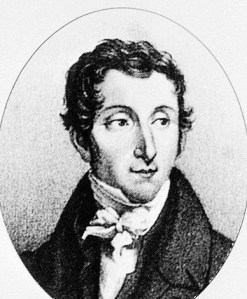
Johann Ludwig Burckhardt
Barth had a scientist’s horror of inaccuracy, and during his explorations he rigorously corrected the mistakes of his predecessors. He criticized Johann Ludwig Burckhardt’s information about the eastern part of Lake Chad as “marred with mistakes.” He complained that Dixon Denham reported the wrong name for the Logone River, “although he has only very insufficiently described it, and entirely failed in fixing its right position.” And so on. Barth believed that progress in science was made by building upon past discoveries and correcting past mistakes. Few things upset him as much as imprecision.
I, on the other hand, was often amused during my research by the errors and exaggerations made by earlier writers. Popular accounts sometimes get untethered from the facts. Because the literature about Barth is so sparse, some writers felt compelled to embellish.

A favorite example occurs in René Lecler’s chapter on Barth in World Without Mercy (1954). Lecler, once a popular author of books about the Sahara, puts his whimsy to work when describing the unexpected meeting in the wilderness between Barth and Eduard Vogel, a German astronomer and botanist who had been sent to join the expedition in 1853.
First, Lecler equates this meeting with Stanley’s discovery of Livingstone. To make this inflationary comparison seem credible, he proceeds to pump the facts full of helium. Upon seeing Vogel, writes Lecler, Barth sat on the ground and wept–a touching image that contradicts both the explorer’s personality and the circumstances, since Barth was deeply irritated at Vogel for assuming that he was dead and leaving him stranded without supplies.
After Barth dried his eyes, continues Lecler as he works up a head of steam, Vogel treated Barth to “the best dinner he had eaten in years.” In fact the two men merely shared a little of Barth’s precious coffee. After feasting, says Lecler, his fancy now in overdrive, the explorers “sang old German lieder together”—a scene pleasant to imagine but also preposterous and unsupported by evidence. For his big finish Lecler declares that Barth and Vogel spent a week enjoying each other’s company in a Chadian village. In truth, they parted after two hours and were nowhere near Chad.
Lecler’s exaggerations may stem from too much admiration: “In terms of exploration,” he writes, “no single man ever equaled Henry Barth’s magnificent journey.”
Another example of imagination triumphing over the facts occurs in The Great Age of Discovery, by Paul Herrmann (translated from German, 1958). Herrmann is often interesting on the methods and motives of explorers but is prone to overstatement. He writes that Barth was “enticed back to Africa time after time,” which is true only if that phrase means “twice.” (A few years before his great journey into North-Central Africa, Barth traversed the edges of the Mediterranean along the coasts of Africa, the Middle East, and Europe.)
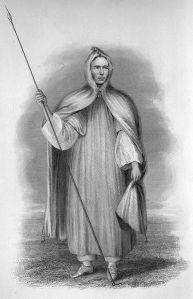
James Richarson
To increase drama, Herrmann says that James Richardson, the leader of Barth’s expedition, died “some days earlier” than Adolf Overweg—yes, some 570 days. Herrmann describes an ambassador that Barth arranged to send to the British consulate in Tripoli from Bornu as a “naked black minister,” which is both inaccurate and condescending, and he puts this man in Tripoli in 1849, before Barth even arrived there. But then Herrmann also has the expedition leaving Tripoli on March 24, 1848, two years early.
Herrmann also asserts that Barth was probably the first white man to reach Kano, though Hugh Clapperton left a famously detailed account of his visit to that city. And he writes that Dorugu and Abbega, the teenaged servants of Overweg and Barth, “settled down in the small Thuringian capital of Gotha,” an exaggeration that verges on fabrication—Barth briefly hosted the youths in Germany before returning with them to Britain.
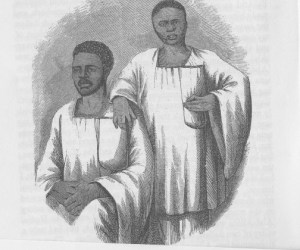
Abbega and Dorugu
In my own work I value accuracy almost as much as Barth did, but even he occasionally slipped. So I mention the mistakes made by my predecessors with rueful near-certainty that an error or two has snuck into my own book, for which I ask the reader’s, and Barth’s, pardon.




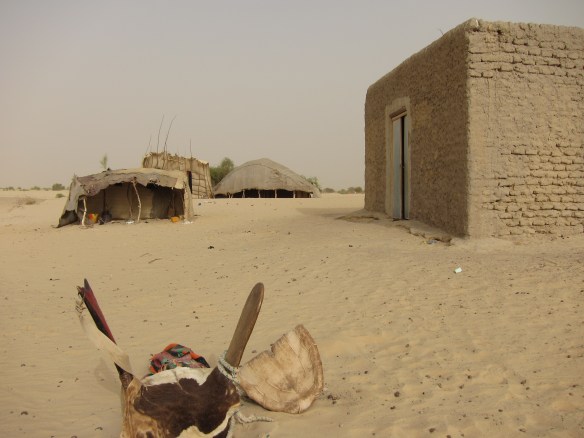
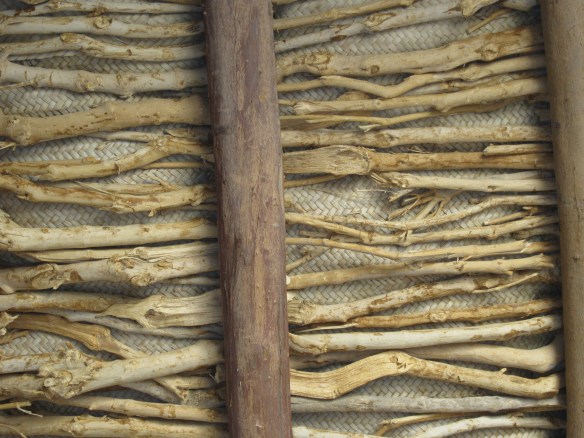


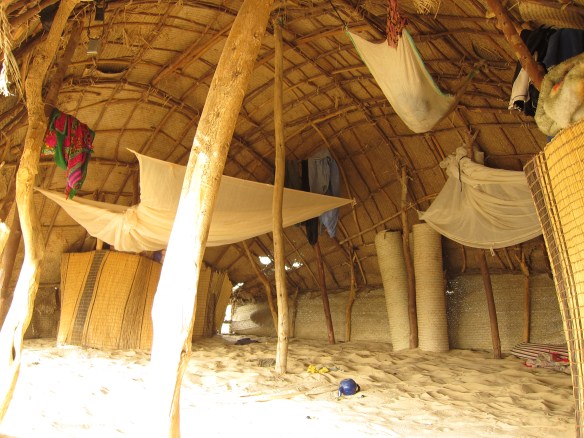
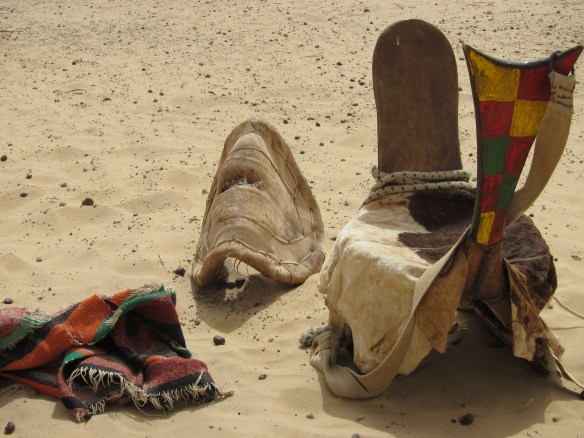
 A boy, maybe 10 years old, rushed over from somewhere and said, “500 francs for the photo.” I laughed. He insisted. I laughed again. He spotted the pen peeking out of my pocket.

 Kemper brings to life the near-forgotten explorer and scientist, who accompanied an English expedition into northern Africa in 1849. Kemper weaves information from Barth’s own publication about the journey as well as the notes of his fellow companions to paint an in-depth and vividly descriptive account of this remarkable expedition. —Booklist
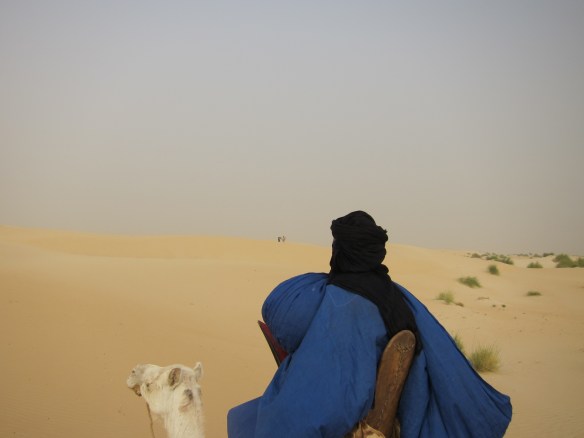 When invading Arabic armies spread Islam across northern Africa in the 7th and 8th centuries, one group ferociously resisted conquest and conversion, leading the Arabs to call them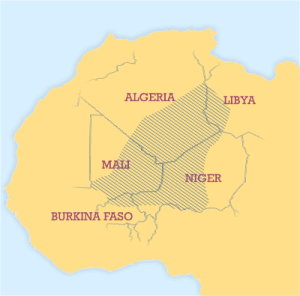

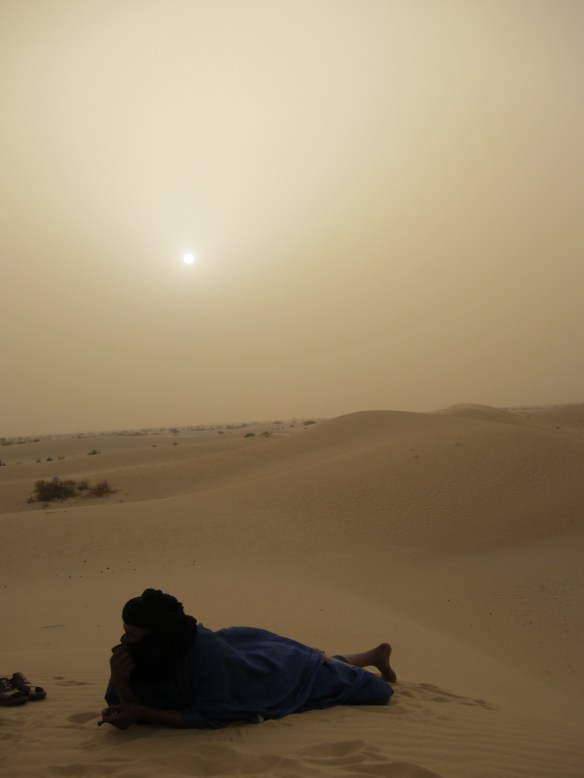
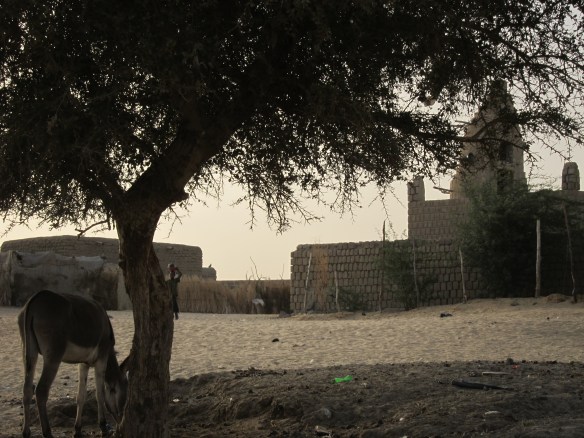
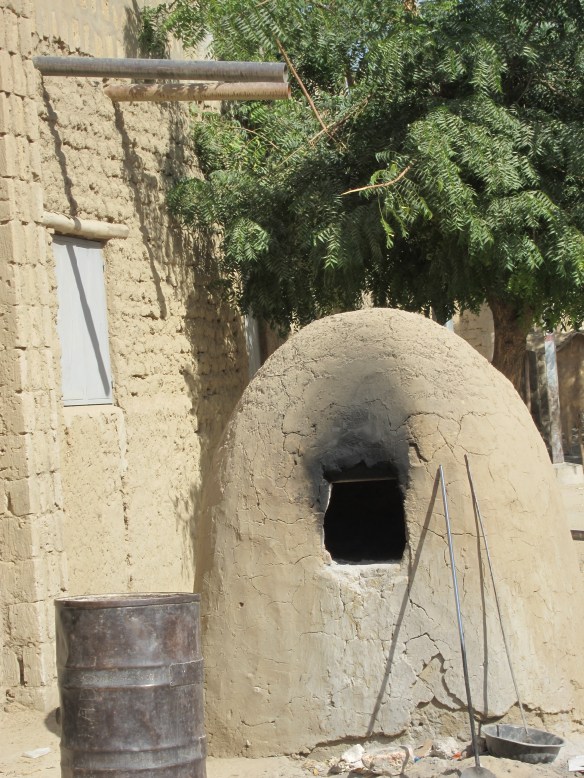


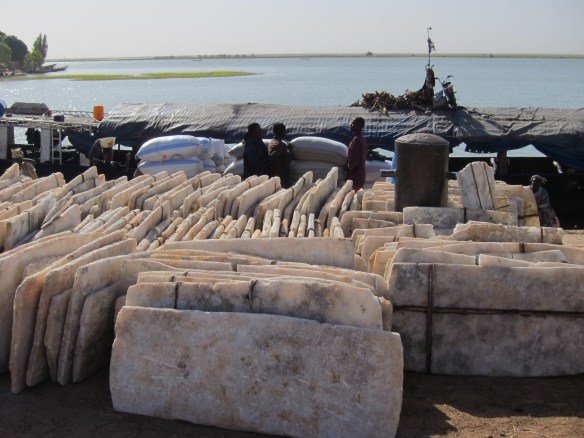
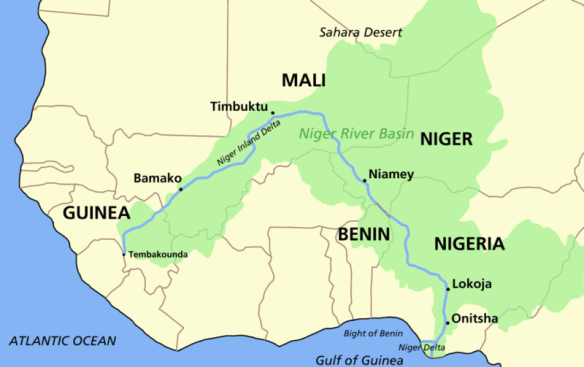
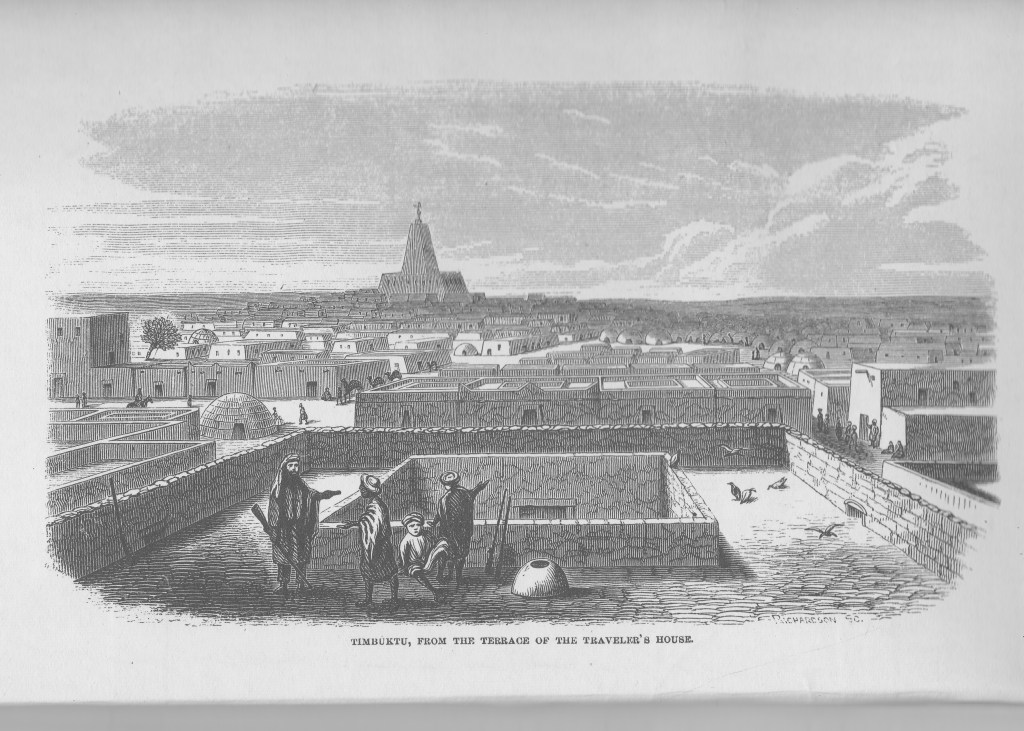
 When Barth reached Kabara the rainy season had started and the port was bustling. Barth was posing as a Syrian sherif. The people in Kabara were split between curiosity and suspicion about him. He wasn’t sure how long his disguise would hold, or what would happen to him once he entered Timbuktu. He spent a few anxious days in the village while his guide, a devious rascal, tried to arrange protection in town.



 Unlike
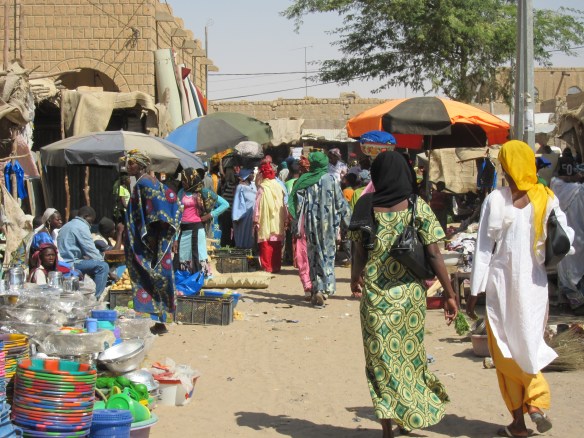 Now as then, customers in Timbuktu’s markets haggle over tomatoes, carrots, cabbages, yams, eggplants, rice, peppers, beans, okra, and peanuts—all grown along the Niger—as well as salt, camel cheese, live chickens, slabs of beef or goat, and new items such as CDs, jeans, and flip-flops.


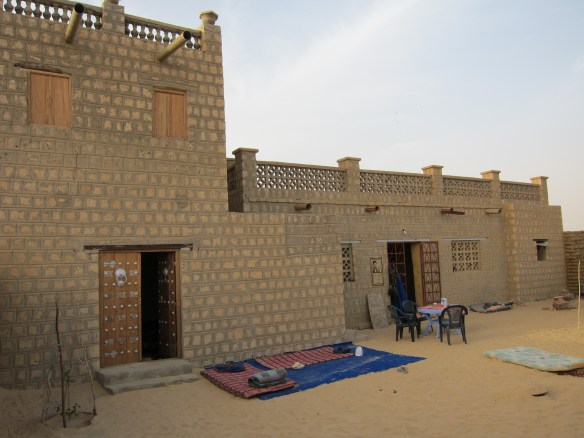


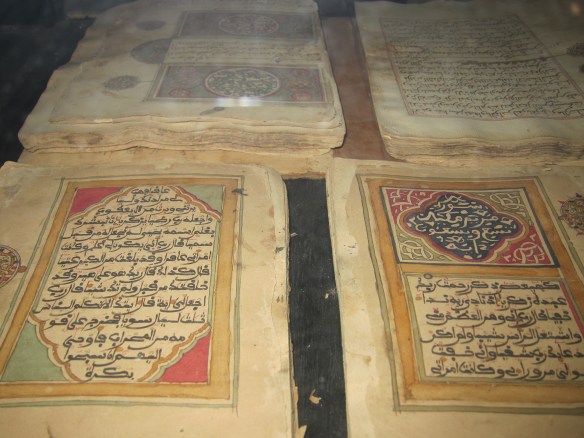 In the 1970s scholars began trying to find and preserve these precious relics before they were destroyed by other marauders—bugs, mold, neglect, time. These efforts gained steam over the next 30 years with help from the Ford Foundation, the government of South Africa, and other groups. Agents went into the countryside to find ancient manuscripts and to persuade their owners to sell them for the sake of preservation. Some owners were paid in cows or camels, some in cash. The result was a
  As a result, Timbuktu is once again dotted with private libraries holding ancient manuscripts—about 60 such libraries, according to








 In the Labyrinth